Garage Door Cable Repair, Done Safely. Same Day.
Cable frayed, snapped, or hanging off the drum? Step away from the door, those cables carry the full force of the springs. A Mo Better tech replaces them in matched pairs, checks what killed them, and quotes it in writing first.
Door stuck crooked in the opening? That's an emergency call, don't force it, don't drive under it. Emergency repair →

Direct answer
Same-day garage door cable repair near you, across Metro Atlanta, Coastal Georgia & Northeast Florida.
Mo Better Garage repairs and replaces broken garage door cables the same day you call, anywhere from Metro Atlanta down I-95 to Jacksonville. Lift cables are the steel ropes that transfer your torsion spring's force to the door, when one frays, snaps, or jumps its drum, the door tilts, jams, or drops on one side. We replace cables in matched pairs, re-tension both drums, inspect the bottom brackets and spring balance, and swap the drums themselves if they're grooved. Coastal homes in Brunswick, Savannah, and Jacksonville can upgrade to stainless cables that shrug off salt air. Call (770) 588-1037 before 11am for same-day service. The diagnostic is free with a completed repair, every quote is written before any wrench moves, and the work is done by our own techs, licensed and insured in Georgia, license #853.
A cable job done halfway is a callback with your name on it.
Here's what burns me up about cable calls. Some outfit rolls out, winds the loose cable back on the drum, sprays it with something shiny, and drives off with your money. Three weeks later the same cable lets go for real, except now the door's crooked, the track's bent, and the "cheap fix" bought you a repair twice the size. I've seen it a thousand times.
Or the other move: they replace one cable. One. The other cable has the exact same miles on it, the same rust in its core, and now it's carrying a door that pulls unevenly against a brand-new partner. That's not a repair. That's scheduling your next failure.
So we look. My techs read the break: fray at the bottom bracket means rust and age. A bird-nested drum means the door hit something and went slack. A clean snap during operation usually means a spring event shocked it. We replace the pair, fix the cause, check the spring balance, and write the whole thing down before you sign. Done once, done right.
Both cables. The cause. One visit.

Is it really the cable?
Cables fail loud or fail sneaky. Here's how each failure looks from your driveway, and what actually fixes it. Read first, call after.
Door hangs crooked, one corner higher
One cable snapped or slipped its drum. The healthy side keeps lifting while the dead side sags, so the door racks diagonally in the opening. Stop using it immediately, every cycle in this state grinds rollers and bends track.
Pair replacement + re-tensionCable dangling loose beside the track
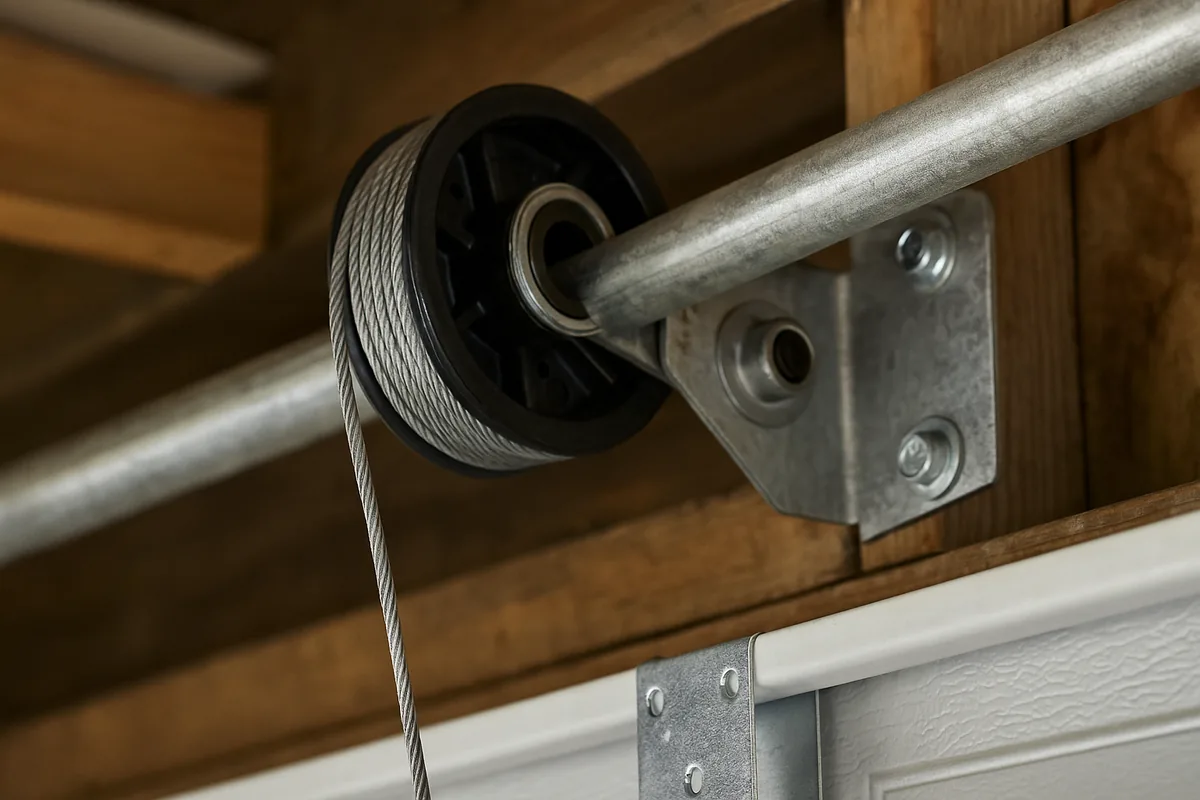
Cable off the drum. Usually the door came down on an obstruction, a rake, a bumper, a basketball, went slack for half a second, and the cable unwound. If the cable's healthy we re-spool it; if it's frayed, it was on the way out anyway.
Re-spool or replaceFrayed strands near the bottom bracket
Corrosion working from the bottom up. The lowest foot of cable lives closest to wet concrete and, near the coast, salt air. Strands pop one at a time like a guitar string unraveling. This is the sneaky failure: the door still works right up until it doesn't.
Matched-pair replacementLoud bang, then the door won't budge
Could be cable, could be spring, the bang sounds identical. A snapped torsion spring is the more common bang, and a spring break often takes a tired cable with it. We diagnose both on arrival; if it's the spring, see our spring repair page.
Spring + cable diagnosisRust-orange staining on the cables
Coastal corrosion, mid-stage. Surface rust you can see means core rust you can't. Common within a few miles of the water in Brunswick, Savannah, St. Simons, and the Jacksonville beaches. Replace before it strands you, and consider stainless this time.
Stainless upgradeDoor lifts unevenly, shudders, feels heavy
Cable tension out of balance, or a drum wearing grooves. When one cable stretches more than its partner, the door climbs lopsided and the opener strains. Sometimes the fix is re-tensioning; sometimes the drums are cutting into the cable. We'll show you which.
Tension + drum inspectionSalt air eats cables. Atlanta just wears them out.
I run crews from the Chattahoochee to the Atlantic, and the cables tell me where they lived before the customer says a word. Same 7x19 galvanized steel, three completely different deaths.
Coastal Georgia, corrosion
In Brunswick and Savannah, salt-heavy humidity creeps into the cable's twisted core and rusts it from the inside. A coastal cable can look presentable and be half gone. We see cables fail here years sooner than the same cable inland, it's the single biggest reason our coastal trucks carry stainless.
Northeast Florida, salt + storms
Jacksonville and the beaches get the coastal corrosion problem plus tropical-season shock loads: wind pressure flexes the door, debris strikes knock it slack, and tired cables let go in clusters after every named storm. We run extra crews to the coast all storm season.
Metro Atlanta, cycle fatigue
In Atlanta, cables die of old-fashioned mileage. Two-car households cycling the door six, eight times a day put 2,000+ cycles a year on the hardware. Add red-clay grit working into the drums and the cables simply wear out on schedule, no drama, just miles.
The cable-and-spring question
Cables and springs age on the same clock.
Your torsion springs do the lifting; your cables deliver that lift to the bottom corners of the door. Every single cycle loads both. So when a shop tells you "while we're here, we should look at the springs," that's not automatically a hustle, the parts genuinely share a lifespan. A spring that's out of balance overloads the cables. A stretched cable un-balances the spring. They wear each other.
Here's how we keep it honest. On every cable call we check the spring's cycle wear and door balance, that's a two-minute test with the door disconnected from the opener. If the springs are mid-life, we tell you, and we leave them alone. If they're at the end, same vintage as the cables that just failed, we quote the combination in writing and let you do the math on one trip charge versus two. Most folks take the single visit. Some don't. Either way you saw the reasoning, not a scare pitch.
And if it turns out the spring is the real problem and the cables are innocent bystanders? Then you don't need this page, you need our spring repair page, and we'll quote that instead. We fix what's broken. How do I know what's broken? Because I'm Mo, and my techs check instead of guessing.
The cable isn't dangerous. The tension behind it is.
A garage door cable is just braided steel. What makes it a hospital trip is what it's attached to: a wound torsion spring holding back a couple hundred pounds of stored force, delivered through the exact brackets a DIY video tells you to unbolt.
Cable work sits near the top of the industry's injury list for one reason: the bottom brackets. They anchor the cables and they are under full spring tension whenever the spring is wound, which is always, unless a trained tech has unwound it with proper bars. Zip out those bolts with a drill and the bracket leaves the door at ballistic speed.
My techs clamp the door, kill the tension completely, re-cable both drums to equal length, and re-tension by counted quarter-turns. It's a sequence, and every step exists because somebody, somewhere, got hurt skipping it.
Reference: DASMA (Door & Access Systems Manufacturers Association International) Tech Data Sheets cover counterbalance cable safety and bottom-bracket warnings.Bottom brackets are loaded triggers
Manufacturers stamp warnings directly onto them for a reason. A bottom bracket under spring tension stores enough energy to break bones when released wrong. It only comes off after the spring is fully unwound, never before.
A slipping cable whips
Steel cable that lets go under load doesn't fall, it lashes sideways faster than you can flinch, at face height, off the drum you're leaning toward. Techs position their bodies out of the whip path by habit. Homeowners don't know there is one.
Uneven re-cabling wrecks the door slowly
Get the two cables wound half a turn different and the door climbs crooked forever after, chewing rollers, straining the opener, and loosening the very brackets that hold the tension. The dangerous part isn't only the moment of the job. It's living with a bad one.
How we fix it without the drama.
Call. Describe the lean.
Tell us which way the door tilts or where the cable's hanging. That one detail tells the dispatcher which parts go on the truck.
We secure the door first.
Before anything else, the tech clamps and stabilizes the door so it can't fall or shift. Then the spring tension comes off, slowly and on purpose.
Read the failure. Show you.
Frayed core? Grooved drum? Rusted bracket? You see exactly what we see, in your driveway, before a price exists.
Quote signed. Pair replaced.
Both cables, matched length, drums re-spooled evenly, brackets checked, spring balance verified. The signed price is the whole price.
Cycle test, then we're gone.
Ten full cycles, balance check, opener force re-set. Most cable jobs run 60-90 minutes with a 12-month parts warranty behind them.
What a cable failure usually brings with it.
A snapped cable rarely acts alone. These are the repairs that most often ride along on a cable call, each has its own page.
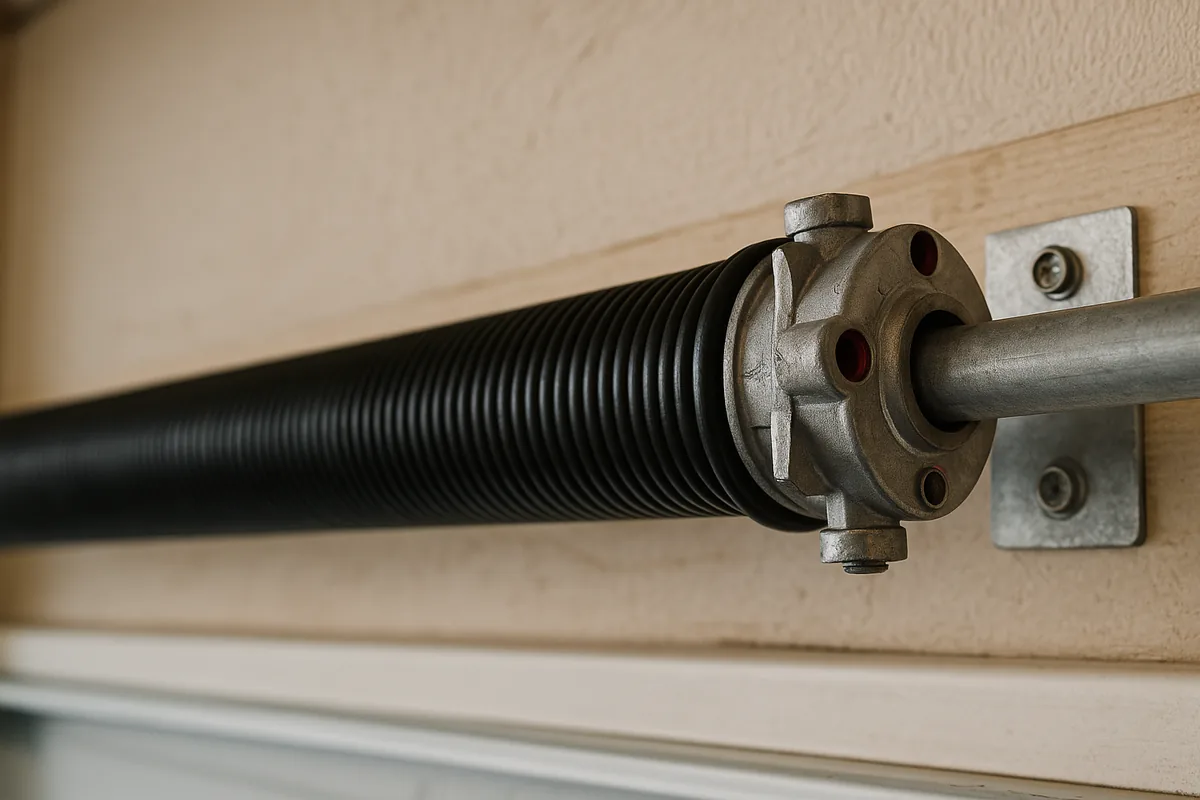
Spring repair
The other half of the counterbalance system. Springs and cables share every cycle, and often share a replacement date.
Spring details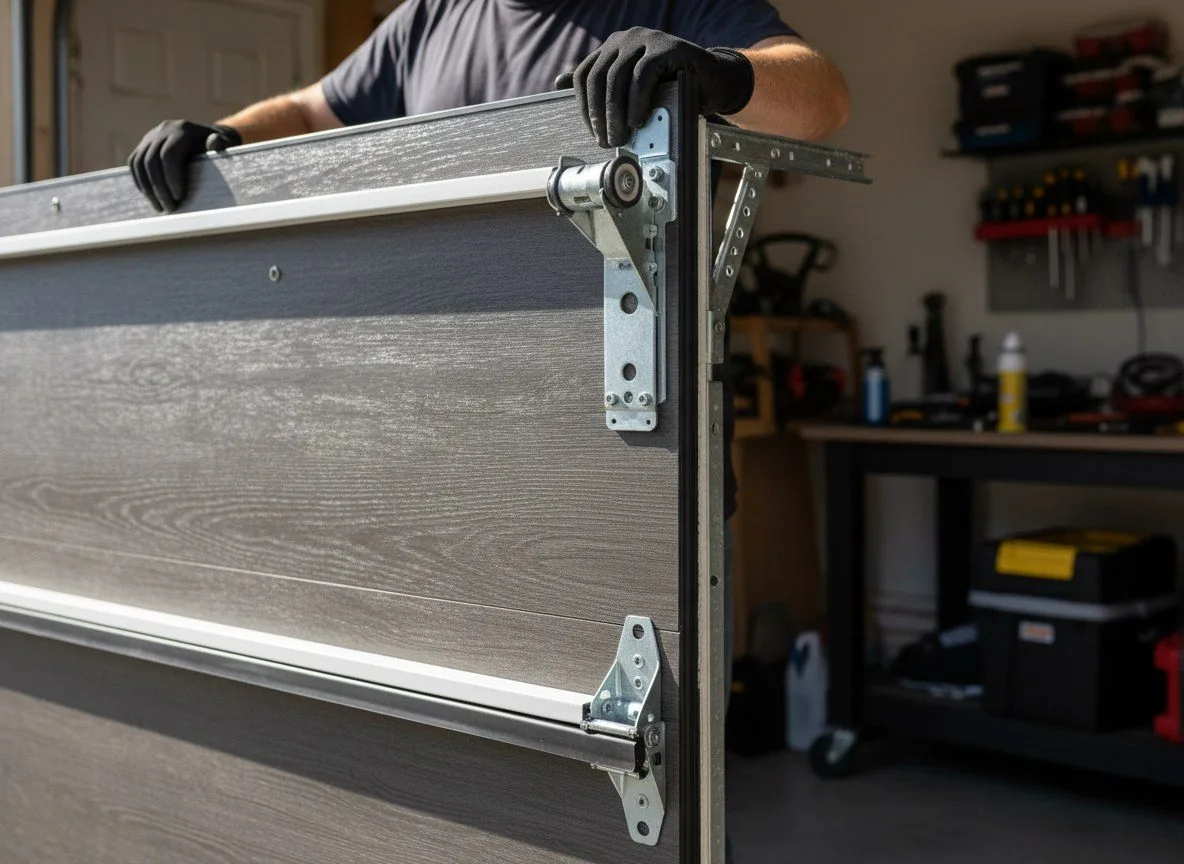
Off-track repair
A cable letting go is the number-one way doors jump the track. We re-seat panels and true the track on the same visit.
Repair details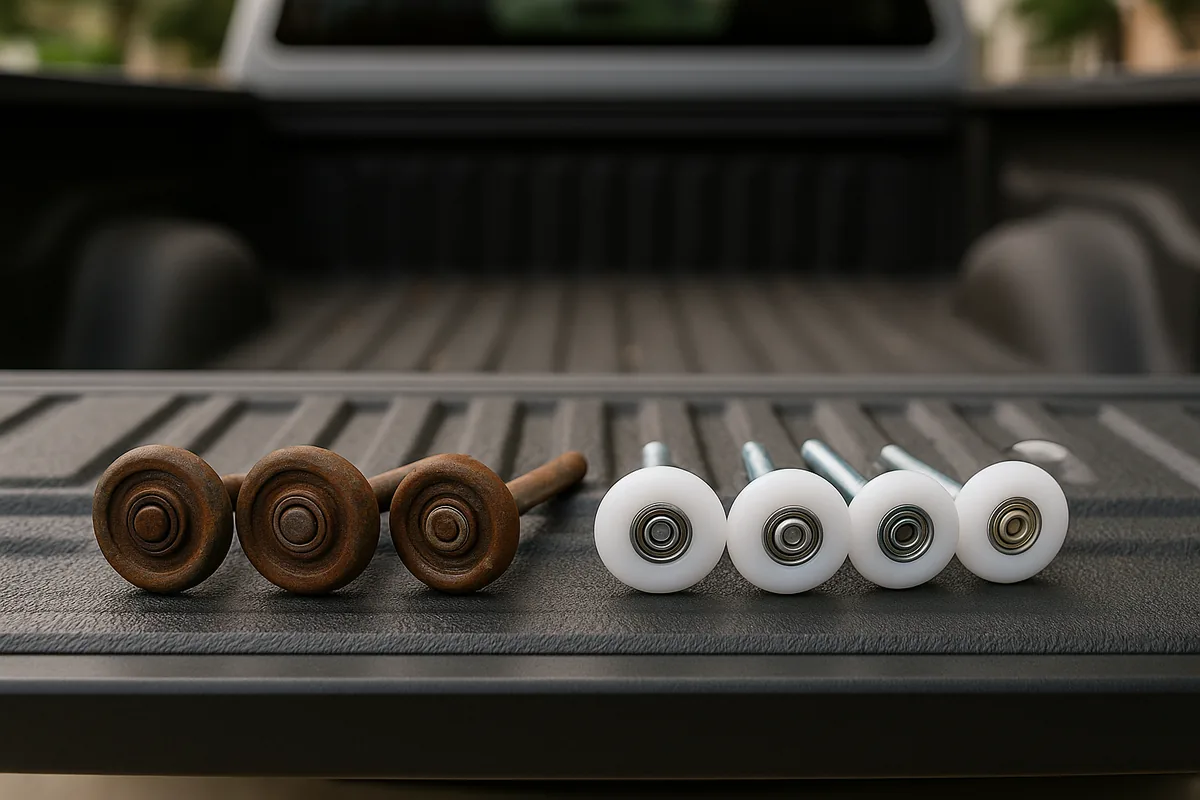
Roller replacement
A door that ran crooked on a bad cable grinds its rollers flat. If yours shudders after a cable event, rollers are suspect two.
Roller details
Annual tune-up
The only repair cheaper than a cable job is the inspection that catches the fray a year early. Ask about coastal-interval plans.
Tune-up detailsCable trucks roll from five shops.
Brunswick shop
Brunswick service details Coastal GA · Chatham · AnchorSavannah
Savannah service details Metro ATL · Fulton · AnchorAtlanta
Atlanta service details Metro ATL · Douglas · ShopDouglasville
Douglasville service details Metro ATL · Cobb · ShopMarietta
Marietta service details NE FL · Duval · AnchorJacksonville
Jacksonville service detailsCan I still use my garage door with a frayed cable?
Why do you replace garage door cables in pairs?
My cable came off the drum but didn't snap. Is that cheaper to fix?
Why did my garage door cable snap in the first place?
Do cables and springs really need to be replaced together?
How long does garage door cable replacement take?
Can I replace a garage door cable myself?
Do you warranty cable replacement?
Cable snapped? Door crooked? We make it Waaaay Mo Better.
Matched-pair cable replacement, same day. Written quote before the wrench moves. Real Mo Better tech, never a sub.
"Mo Better Garage, we make it waaaay 'mo better."