Garage Door Roller Replacement, The Quiet Door Upgrade.
Grinding? Squealing? Whole house hears the door open? Nine times out of ten that racket is worn rollers, not a dying opener. A Mo Better tech swaps the full set for sealed nylon and your door goes library-quiet, same day.
Roller popped out and the door's jammed? Stop cycling it, that's how doors leave the track entirely. Emergency repair →

Direct answer
Garage door roller replacement near you, across Metro Atlanta, Coastal Georgia & Northeast Florida.
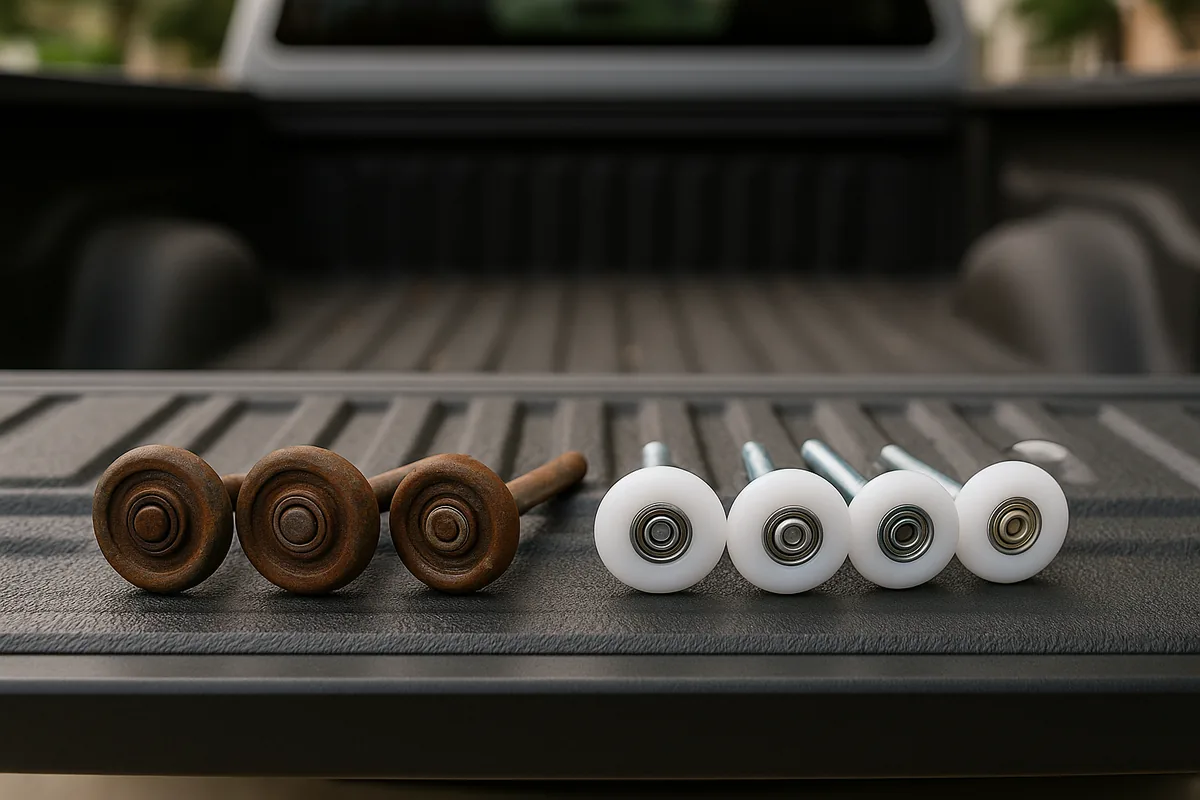
Mo Better Garage replaces worn garage door rollers with sealed-bearing nylon sets, the fix for grinding, squealing, and shaking doors, the same day you call, anywhere from Atlanta to Jacksonville. Every roller visit starts with a track-alignment check, because bent or out-of-plumb track destroys new rollers and deserves its own fix; we quote whichever the door actually needs. A standard door takes a 10-roller set, replaced together, with hinges, bearing plates, and door balance checked in the same hour. Inland, Atlanta's pollen and red-clay grit are what kill roller bearings; on the coast, salt air corrodes steel wheels, stainless upgrades ride on our Brunswick and Savannah trucks. Call (770) 588-1037 before 11am for same-day service, written quote first, licensed and insured in Georgia, license #853.
They heard a squeak and sold her a new opener.
True story, and I hear a version of it every month. Door starts screaming, homeowner figures the motor's dying, calls a shop. Guy listens for five seconds and starts writing up a brand-new opener, for a noise the opener wasn't making. The rollers were steel, fifteen years old, bearings packed with a decade of pollen mud. A set of nylon rollers would've fixed it before lunch for a tenth of the price. Heh. But there's no commission in a tenth of the price.
The other classic: the "tune-up" that's just a grease bath. They spray everything that moves, the squeal quiets for six weeks, and then it's back, because you can't lubricate a bearing that's already ground itself oval. Spraying a dead roller is a cover-up, not a repair.
My techs speak fluent garage door. Grind means bearings full of grit. Screech means dry metal on metal. Shudder means flat spots or bent track. We listen, we check the track before we blame the rollers, and we quote the thing that's actually broken, in writing, before we touch it. If the opener really is the problem, we'll say so and point you to the opener page. Fair's fair.
Diagnose the noise. Fix the cause. Skip the theater.

What's that sound actually saying?
Match the noise, read the diagnosis. Rollers cause most of these, but not all, and we'll tell you which is which before anything gets replaced.
Grinding, like gravel in a blender
Roller bearings full of grit. Open-bearing steel rollers inhale pollen and red-clay dust until the balls grind oval. Once you hear grinding, the bearings are past saving, lubrication just makes wet sandpaper. Full set replacement.
Nylon set swapHigh squeal or screech on the move
Dry metal, worn steel wheels or roller stems spinning in worn hinge sleeves. Sometimes a lube job buys time if we catch it early; usually the wheel surface is already scored. We'll tell you which stage yours is in.
Rollers + hinge checkDoor shakes or shudders mid-travel
Flat-spotted rollers or track out of alignment, this is the coin-flip symptom. A roller with a worn flat thumps at the same point every cycle; a pinched track shudders the whole door. The plumb-line test answers it in minutes.
Track-vs-roller diagnosisPop, then a wheel on the floor
A roller shed its wheel, cracked nylon or a collapsed bearing. The door corner is now riding on a bare stem, carving up your track. Stop using the door; this one graduates to an off-track emergency fast.
Same-day replacementRumble you can hear in the bedroom above
Steel rollers transmitting vibration up the track into the framing. The classic bonus-room-over-the-garage complaint. Sealed nylon rollers cut the transmitted rumble more than any opener swap would, it's the quiet-door upgrade, and it's cheap.
Quiet-door packageDrags or sticks at the same spot, one side
One tired roller binding, or a track pinch at that exact height. Run the door by hand with the opener disconnected: a rhythmic catch that travels with the door is a roller; a catch at a fixed height is the track. Either way, diagnosable in one visit.
Hand-test diagnosisTwelve wheels. One right answer, mostly.
Every roller quote comes down to one materials question. Here's the whole argument, laid out the way I'd sketch it on your driveway.
Sealed-bearing nylon wins for almost every residential door in Georgia. The nylon wheel is quiet against steel track, and the sealed bearing is the real hero, it locks out the pollen, clay dust, and salt moisture that murder open bearings here. No track grease needed, no rust, no freight-train soundtrack.
Steel still has a job: very heavy doors, some custom wood builds, and budget rentals where noise doesn't matter. If your door genuinely needs steel, we'll spec it and say why. What we won't do is put builder-grade open-bearing rollers back on a Georgia door and call that a repair, that's just rescheduling the same noise for two years out.
Roller shorthand: "13-ball" means thirteen ball bearings in the race, more balls, smoother load spread, longer life. Builder-grade rollers often carry none at all.Noise: nylon, by a mile
Nylon on steel track runs whisper-quiet. Steel on steel rings the track like a rail line. If anyone sleeps over the garage, this decision is already made.
Grit: sealed bearings or bust
Atlanta's yellow pollen season and red-clay dust find every open bearing. Sealed races keep the grinding paste out, which is why our sets outlast the builder rollers they replace several times over.
Salt: stainless stems on the coast
From Savannah to the Jacksonville beaches, standard zinc-plated stems corrode where they enter the hinge. Coastal trucks carry stainless-stem nylon rollers for exactly this, ask for them by name.
Weight: match the roller to the door
Oversized, insulated, and custom wood doors load rollers harder. We weight-rate the set to the slab instead of grabbing whatever's cheapest, an under-rated roller is a flat spot waiting to happen.
The diagnosis that saves you money
Bad track kills good rollers. We check it first.
Here's a pattern I hate: homeowner pays for new rollers, door's quiet for eight months, then the grinding comes back. The rollers weren't the disease, they were the victim. A vertical track that's a quarter-inch out of plumb, a joint that got nudged by a ladder, a bracket that loosened in the framing: any of those pinches every roller that passes, hundreds of times a month, until the new set is as chewed up as the old one.
So the track check isn't an add-on at Mo Better, it's step one of every roller call. Plumb line on both verticals, straightedge through the curves, torque check on every bracket, and a hand-cycle with the opener disconnected to feel for pinch points. Takes ten minutes. If the track's the problem, you'll get a track quote, not a roller quote. If both are worn, common on doors that ran crooked for months after a cable event, you'll see both, itemized, and pick what fits the budget today.
That's the whole trick to honest roller work: fix the cause before the symptom, or you're just renting silence. How do I know? Because I'm Mo, and because I've re-done enough eight-month-old roller jobs from other shops to furnish a museum.
Loud to library, in about an hour.
Tell us the noise.
Grind, screech, shudder, thump, your impression of the sound over the phone genuinely helps us stock the truck right.
Track first, ten minutes.
Plumb, straightness, bracket torque, pinch points. If the track's the real culprit, the quote changes before it's written, not after.
You see the evidence.
We pull a worn roller and put it in your hand next to a new one. Scored wheel, wobbling bearing, you'll feel the diagnosis yourself.
Full set, one section at a time.
Sign the quote, then we swap all ten-plus rollers working section by section, the bottom pair handled with the cable tension secured.
The quiet test.
Hinges lubed, balance verified, opener force re-tuned, then a full cycle with you standing right there. If it isn't quiet, we're not done.
If it wasn't the rollers, it's one of these.
The same symphony of squeaks and shudders can come from four different instruments. Each suspect has its own page.
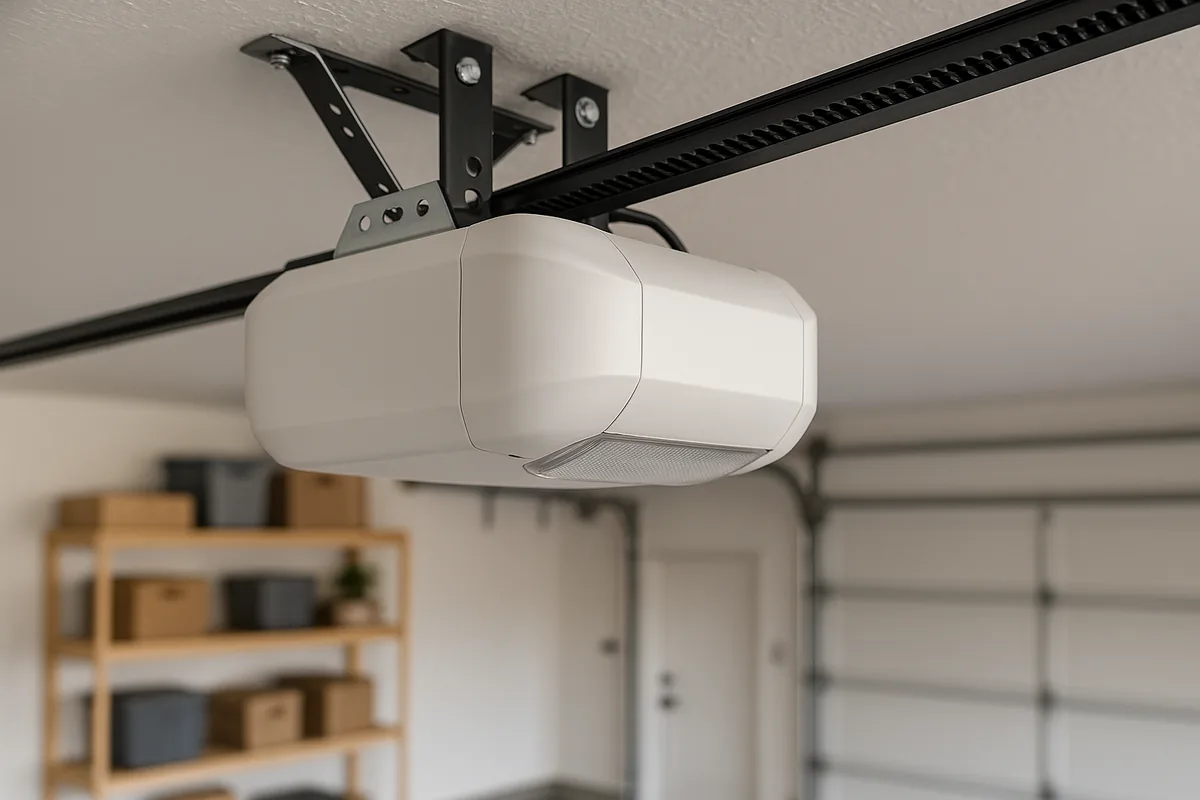
Opener repair
Rattling chains, worn trolleys, and straining motors make roller-ish noises. If the racket comes from the ceiling unit, start here.
Opener details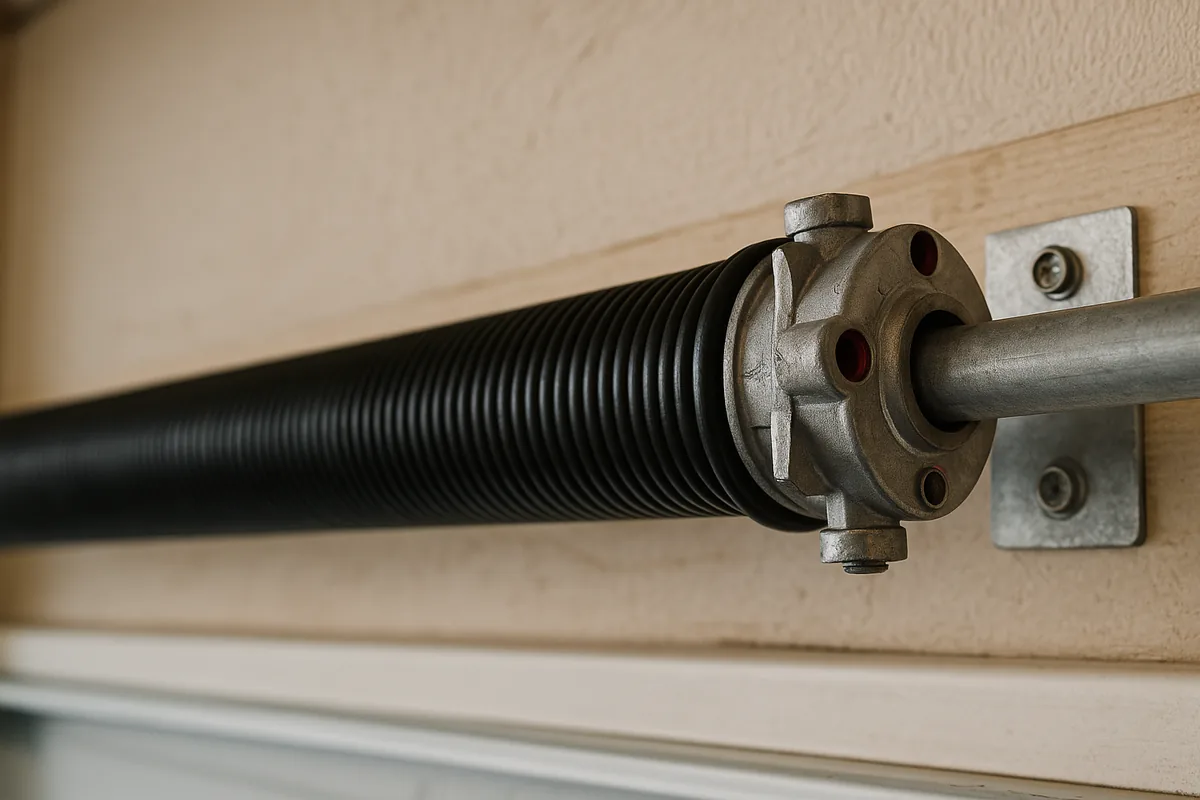
Spring repair
A groan or bang during travel points at the springs, not the rollers. Unbalanced springs also overload rollers, they're connected.
Spring details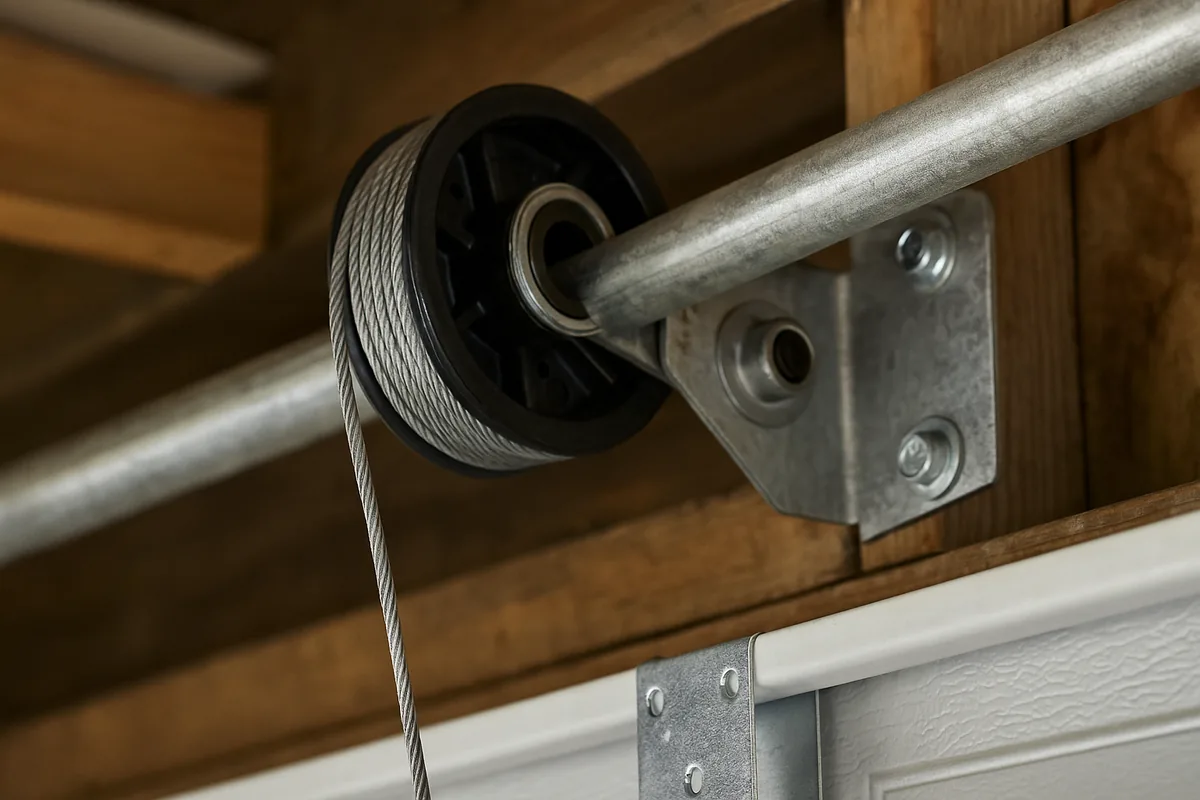
Cable repair
A door that ran lopsided on a stretching cable grinds its rollers unevenly. If one side's rollers died young, check the cables.
Cable details
Annual tune-up
Rollers, hinges, springs, cables, lube, balance, the whole orchestra tuned once a year, before anything starts screeching.
Tune-up detailsQuiet doors delivered region by region.
Brunswick shop
Brunswick roller details Coastal GA · Chatham · AnchorSavannah
Savannah roller details Metro ATL · Fulton · AnchorAtlanta
Atlanta roller details Metro ATL · Douglas · ShopDouglasville
Douglasville roller details Metro ATL · Cobb · ShopMarietta
Marietta roller details NE FL · Duval · AnchorJacksonville
Jacksonville roller detailsShould I choose nylon or steel garage door rollers?
Why is my garage door grinding or squealing?
Is it the rollers or the track? How do you tell?
Can worn rollers make my door come off track?
How many rollers does my garage door have, and do you replace them all?
Will new rollers actually make my door quiet?
Why do garage door rollers wear out faster in Georgia?
How long does roller replacement take, and what does it include?
Sick of the screech? We make it Waaaay Mo Better.
Full nylon roller set, track checked first, quiet by dinner. Written quote before the wrench moves.
"Mo Better Garage, we make it waaaay 'mo better."